Rate Increases in an AI-Enabled Legal Market: Why the Billable Hour Is Running Out of Road

Ninety-six per cent of UK law firms raised their rates in the past twelve months, according to BigHand. Eighty-nine per cent reported increased write-offs. Chris Jeyes asks: if you keep raising rates but writing off more of what you bill, what exactly is the strategy in an AI-enabled market?
The Numbers
These figures come from BigHand's 2026 Annual Law Firm Finance Report, summarised in an article by Bríana McCrory on Artificial Lawyer. I have not independently verified the underlying data, and the report comes from a vendor with a product to sell. That said, the headline findings track with what most law firm finance directors will recognise from their own dashboards.
The picture is consistent across multiple data points. Ninety per cent of firms report increased debtors. Half now cite aged work in progress as their primary cash-flow pressure, up from 32% last year. A third of firms are applying discounts of between 11% and 20%. And 88% expect write-offs to increase again in 2026.
So rates go up, but realisation goes down. Clients push back with discount demands. Cash sits locked in ageing WIP. The top line looks healthy. The margin tells a different story.
Why AI Makes This Worse for Firms (and Better for Clients)
The traditional defence of annual rate increases runs something like this: our people are more experienced, our overheads have risen, and the work is more complex. That argument already strained credibility when applied across the board. AI is about to break it entirely.
Consider a straightforward due diligence exercise. Two years ago, a team of three associates might have spent forty hours reviewing a data room. Today, with competent AI-assisted review tools, that same exercise might take fifteen hours. The quality may be equivalent or better, given that AI does not lose focus at hour thirty-seven.
If I am the general counsel commissioning that work, I know this. I may not know exactly which tools you use, but I know the capability exists. I read the same press releases. I attend the same conferences. And when I see a rate card that has gone up 5% while the work that rate card prices should, by rights, take half the time it used to, I reach for the discount lever.
That is what the BigHand data is showing us. The rising write-offs and expanding discounts are not just symptoms of poor billing discipline. They are the market's early-stage price correction for AI-driven efficiency gains that firms are capturing on the supply side but pricing as if nothing has changed.
The Regulatory Dimension for UK Firms
For solicitors regulated by the SRA, this tension has a compliance edge.
The SRA Standards and Regulations require clear and accurate billing (see paragraphs 1.1 and 1.5 on service and competence). A firm that uses AI to reduce the actual time spent on a task but bills at the old manual rate, or a rate inflated to compensate for fewer billable hours, is walking towards a transparency problem. If a client later discovers that the work was substantially automated, and the bill did not reflect that, the firm has a client care issue and potentially a regulatory one.
Rising write-offs also raise questions under the SRA's outcomes-focused regulatory framework. Persistent write-offs suggest either that work is being done that clients did not authorise at that price, or that fee estimates are consistently inaccurate. Neither looks good under scrutiny.
There is a further angle. Firms with significant aged WIP and mounting debtor books face cash-flow pressures that, at the extreme end, can trigger concerns about financial stability. The SRA has shown willingness to intervene where firms' financial management raises risks to clients. A firm that is raising rates, seeing those rates rejected through write-offs and discounts, and accumulating ageing receivables is not demonstrating strong financial governance.
The Billable Hour Is Not Dead. But It Is Sick.
I should be clear: I do not think the billable hour disappears overnight. It remains a useful unit of measurement for genuinely bespoke, high-stakes advisory work where the lawyer's time and judgement are what the client is buying. Complex litigation strategy, novel regulatory advice, sensitive negotiations: these resist easy automation and justify time-based pricing.
But a huge volume of legal work is not that. Document review, contract drafting from precedents, initial case assessment, regulatory filings, lease reviews, company secretarial tasks: much of this is being transformed by AI. Continuing to price it by the hour, at increasing hourly rates, when the hours are shrinking, is a position that firms cannot hold indefinitely.
The ABA Journal reported on the same BigHand findings and noted that firms may need to embrace changes in billing methods to succeed. That phrasing is diplomatic. A blunter version: firms that do not rethink pricing will find that clients do it for them, through discounts, panel consolidation, and insourcing.
Alternative fee arrangements (fixed fees, capped fees, blended rates, success fees) are the obvious direction of travel. But they require something most firms are poorly equipped for: accurate cost data at the task level. If you do not know what a piece of work actually costs to produce with AI assistance, you cannot price a fixed fee without either leaving money on the table or pricing yourself out of the work.
What This Means on Monday Morning
If you are a managing partner, finance director, or head of practice at a UK firm, there are concrete steps worth considering now rather than after the next rate round fails.
Audit your AI efficiency gains. Know, quantitatively, how much time AI tools are saving on specific task types. If you cannot measure it, you cannot price around it.
Model alternative fee structures. Pick two or three high-volume practice areas. Build pricing models based on actual AI-assisted delivery costs, not legacy time estimates. Test them with willing clients.
Review your write-off patterns. If write-offs are concentrated in particular practice areas or client relationships, that is a pricing signal. Treat it as data, not as a billing failure to be managed away.
Get ahead of SRA transparency expectations. If you are using AI to deliver work, your client care letters and costs information should reflect that. Proactively disclosing AI use in service delivery is better than being asked about it after a complaint.
Have the partnership conversation about margin versus revenue. A firm that bills less but realises more, with lower write-offs and faster cash collection, is in better financial health than one with a higher top line and 20% discounts baked in. This is an arithmetic argument, not a philosophical one. Make it with numbers.
The Direction of Travel
The BigHand report (and analysis from Legal Practice Intelligence) paints a picture of an industry raising prices into a market that is already pushing back. AI accelerates the pushback by making efficiency gains visible and measurable for both sides of the transaction.
UK firms face a particular version of this challenge because the SRA's transparency requirements add regulatory teeth to what might otherwise be a purely commercial negotiation. A client who objects to your rate increase is a business problem. A regulator who questions whether your billing reflects the actual cost of AI-assisted delivery is a different category of problem entirely.
The firms that will do well in this environment are not necessarily the ones with the best AI tools. They are the ones that rethink pricing to align with the value they deliver rather than the time they record. That requires leadership, good data, and a willingness to cannibalise the billable hour before clients do it for you.
The rate card had a good run. It is time to build something better.
Sources
Stay ahead of the curve
Get practical AI insights for lawyers delivered to your inbox. No spam, no fluff, just the developments that matter.
Chris Jeyes
Barrister & Leading Junior
Founder of Lextrapolate. 20+ years at the Bar. Legal 500 Leading Junior. Helping lawyers and legal businesses use AI effectively, safely and compliantly.
Get in TouchMore from Lextrapolate
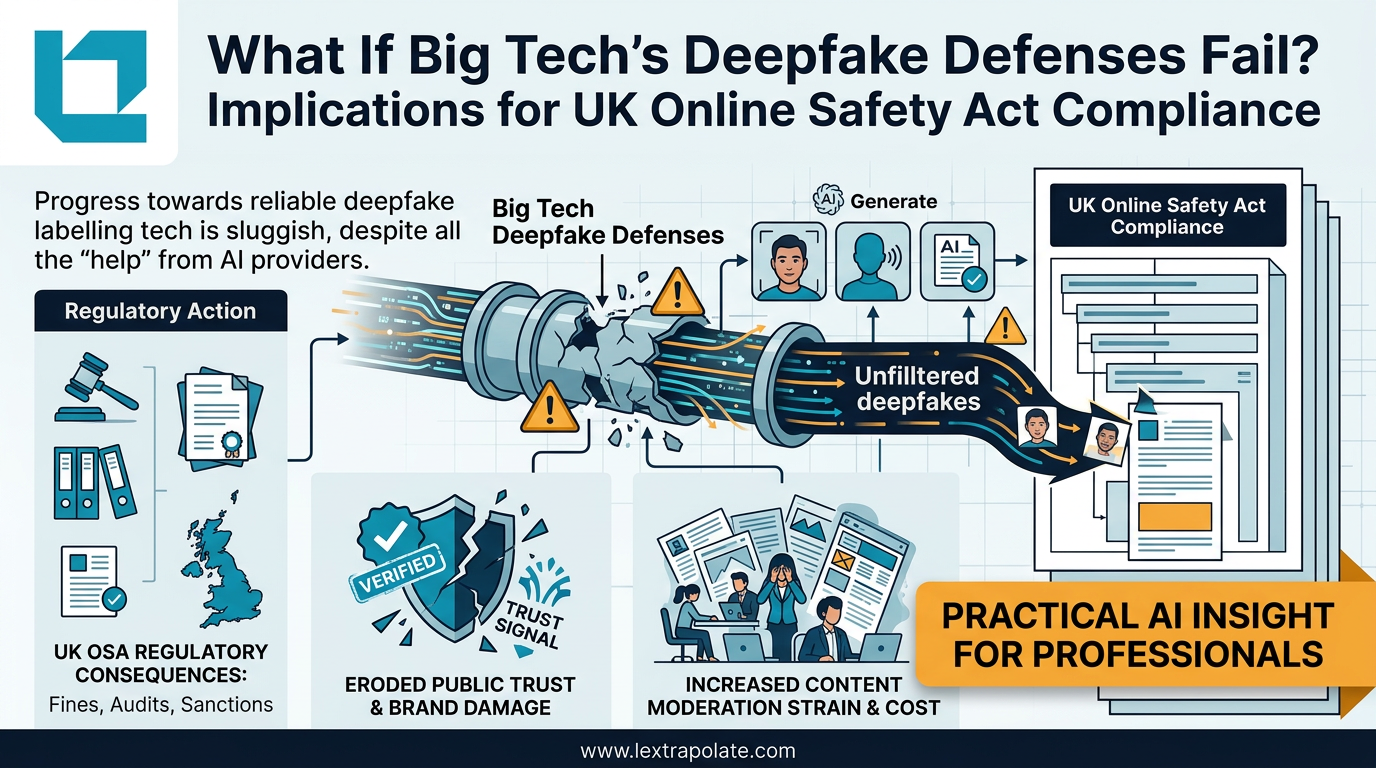
What If Big Tech's Deepfake Defences Fail? Implications for UK Online Safety Act Compliance
Detection tech is losing the arms race against deepfake generators. UK lawyers need technical literacy now, not when the first case lands.
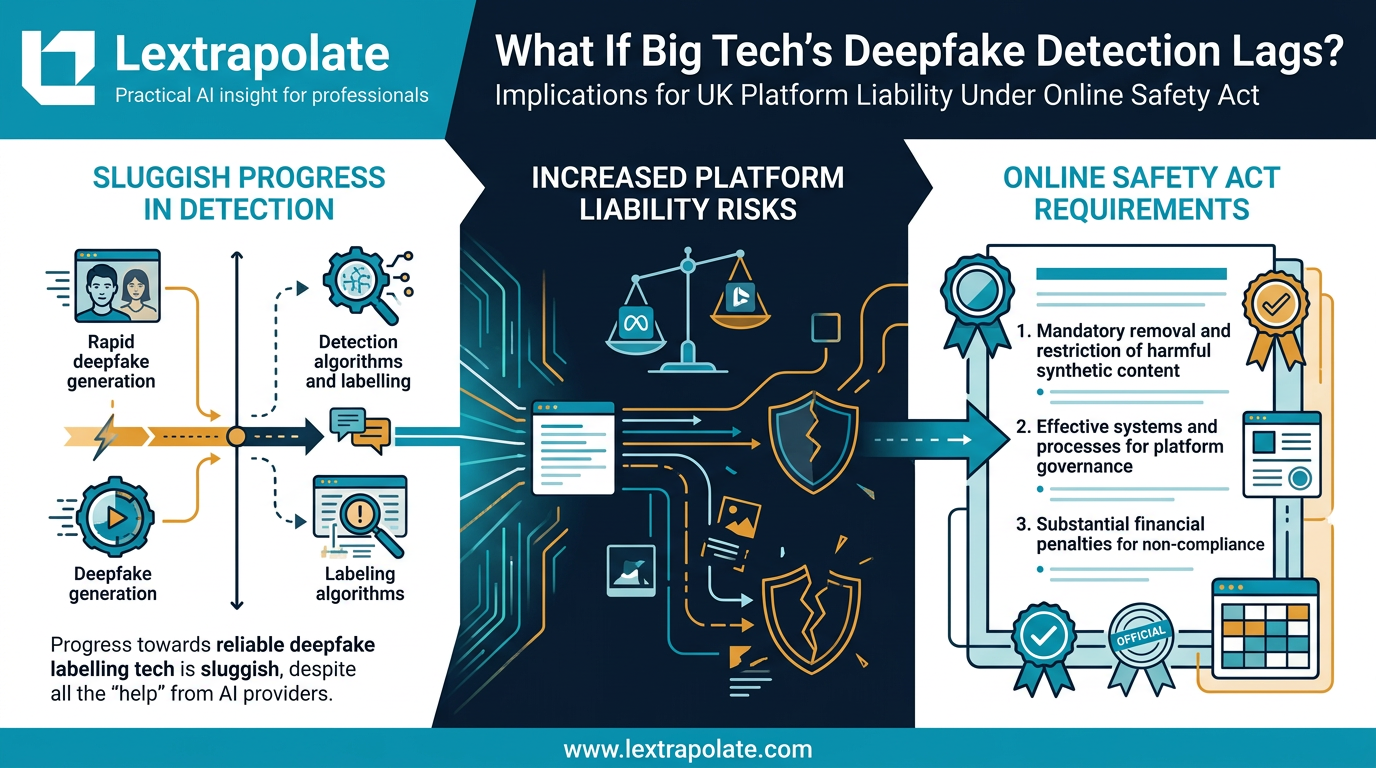
What If Big Tech's Deepfake Detection Lags? Implications for UK Platform Liability Under the Online Safety Act
Deepfake detection is losing the arms race. For UK lawyers, that creates evidence integrity risks and Online Safety Act exposure worth taking seriously now.
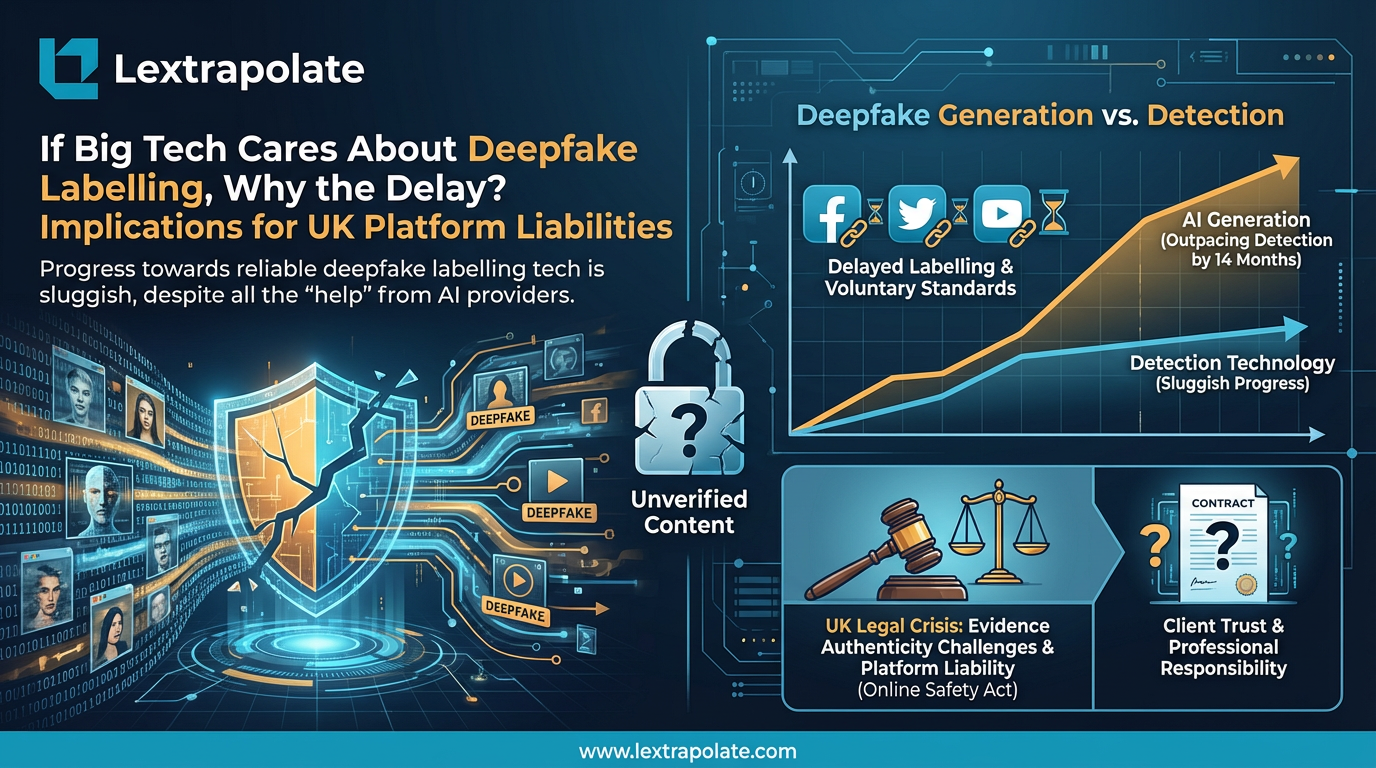
What if you can no longer trust the video your client sent you?
Deepfake detection is losing the arms race. For lawyers relying on digital evidence, that is not a technology problem. It is a professional one.